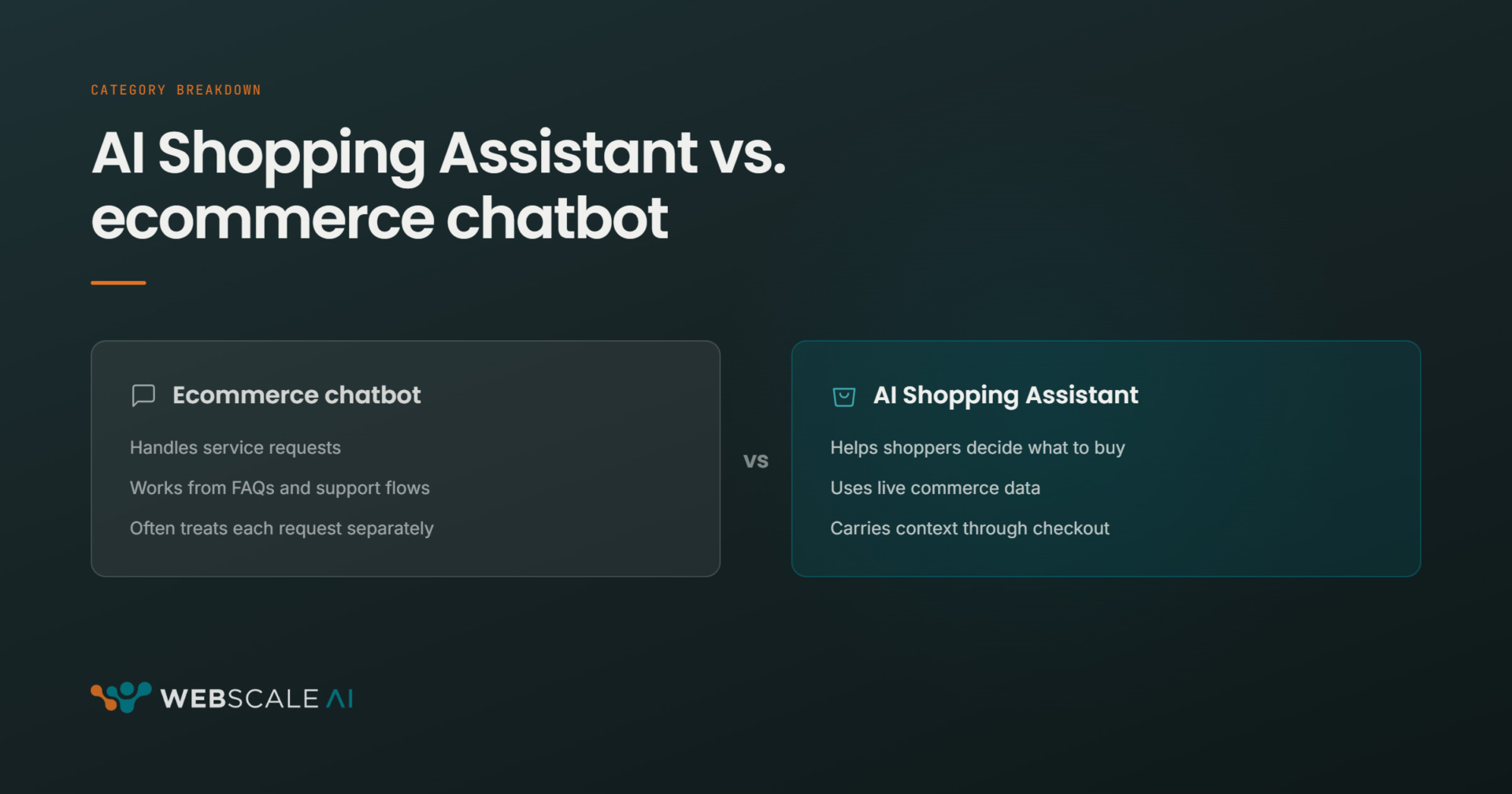
When you’re evaluating commerce infrastructure, two categories show up that look similar on paper. They use the same language, offer overlapping features and land on the same vendor short list. The architectural difference between them is what matters before you sign.
What managed hosting does
Managed hosting handles the operational complexity of running an application on cloud infrastructure. Server provisioning, patching, deployment automation, uptime monitoring and support when things go wrong. It’s a meaningful service. For merchants who don’t want to build and maintain their own cloud operations, it removes a significant category of work.
What managed hosting doesn’t do is participate in the commerce data flow at the depth an infrastructure-layer platform does. It manages and monitors the infrastructure the data flows through. That’s a different architectural position from one that collects commerce signals at the request layer continuously.
What an infrastructure-layer platform does differently
A platform that operates at the infrastructure layer is positioned inside the request path. Every HTTP request, every session signal and every behavioral event passes through it. That positioning enables capabilities that are architecturally unavailable to a platform observing from outside.
A CDP that lives at the infrastructure layer collects first-party behavioral data before it can be blocked by browser restrictions or sampled by application-layer tools. The data is complete because it’s captured at the point where every signal is visible.
An autoscaling system reading live commerce signals scales ahead of the surge. The capacity is available when the surge begins, before any server feels pressure.
An AI layer with access to real-time behavioral data makes recommendations based on what’s happening in the current session.
The four architectural gaps
Data collection: Managed hosting collects from logs, application events and third-party tools. An infrastructure-layer platform collects from the request path continuously.
Autoscaling: Managed hosting scales on resource thresholds. An infrastructure-layer platform scales on commerce signals.
AI capabilities: Managed hosting AI, where it exists, runs on application-layer data. The signals the storefront application can see, after browser restrictions and tracking blockers have done their filtering. An infrastructure-layer platform runs AI on request-path data. Every session signal and behavioral event, captured before it can be sampled or blocked.
Market focus: Managed hosting is designed to serve the widest possible merchant range. An infrastructure-layer platform is purpose-built for mid-market and mid-enterprise merchants on Adobe Commerce, Magento and Shopware.
How to evaluate which you have
The question that reveals the architecture is: at what layer does your platform sit in the request path, and what data does it have access to as a result?
An answer that describes log analysis and third-party integrations is describing a platform that observes commerce. An answer that describes inline data collection, native CDP, behavior-driven autoscaling and first-party AI is describing a platform that participates in it.
The category difference is architectural. It shapes what is possible at every layer of the commerce stack.
Why this distinction matters more in 2026
AI commerce requires a data foundation that managed hosting can’t provide. A platform that observes the data path can integrate third-party AI tools. A platform that lives inside the data path can run native AI on complete, real-time first-party data.
Merchants evaluating AI commerce capabilities in 2026 are choosing between these two architectures, whether they frame the decision that way or not.
See how Webscale’s architecture compares:
webscale.com/request-a-demo